
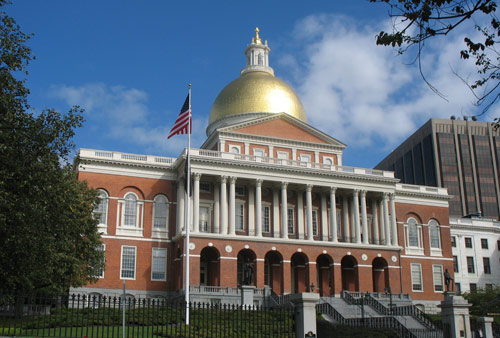
From the Massachusetts Pirate Party website:
We here at MPP would like to invite you all to join us at a public hearing this coming September 22 before the House Agriculture Committee about Massachusetts’ GMO labeling bill, H. 3242. Support GMO labelling? Great! Come on out!
But if you are one of the people who is on the fence about GMO regulation, or if you are outright pro-GMO, this article is directed toward you.
There is a lot of talk in the media of folks who are anti-GMO being anti-science. The commercial media, which remember, gets millions from Monsanto, DuPont, and Bayer, focuses on the issue of safety concerns as being “backward.” No debate. The scientists who question the safety of GMOs get little airtime, if any. The Pirate argument doesn’t even touch on the matter of food safety. So let’s set that matter aside for now. There are many reasons to label GMOs aside from a safety concern, if any.
Before we get into any points of why label, please remember the stink food producers made when the law required them to merely list ingredients. Remember the stink the meat packing industry made against laws regulating safety of meat production, demands that intensified greatly after the publishing of Upton Sinclair’s “The Jungle”. Power cedes nothing without a demand. With this in mind:
We oppose the privatization of the commons
For the Pirates the issue of GMOs is about privatization. We oppose the privatization of the commons: The water that has been on this planet since before humans existed that falls from the sky, the seeds that invented themselves and therefore should not be able to be patented by any person, human or corporation. The usefulness of information that humans collect depends upon all that has been learned before for context and therefore needs to be free to be used by all humanity.
Fairness
What makes a seed useful? What is the essence of any seed? Food? Material? Poison? Weed? What makes a seed of use to humanity, THAT has already been produced, by nature. What percentage of an original genome is changed in a GMO? .0099%? Not bits that changes the seed’s essential usefulness, either, the reason we cultivate that seed to begin with, but a bit that ostensibly makes the seed “more useful.” For that infinitesimal change to what nature invented, a patent is granted. Patents are significant because they confer control. They allow companies to sue. People whose crops are contaminated by GMO pollen have two choices: Pay the licensing rights to the contaminator or go to court. Court costs money. Small farmers can’t afford to fight.
Tradition
The seed companies demand that seeds not be reused. This is a waste. Farmers abhor this practice and will avoid the GMOs for this reason alone. But instead of leaving farmers to choose to use what seeds they want the biotech companies to send “emissaries” out to the farmland to strong arm and threaten the people there with financial ruin, even physical violence.
Known toxins
There is little debate about whether glyphosate is dangerous for human consumption. And it is used in conjunction with GMOs 100% of the time.
Effects on the Environment
Monoculture, a practice employed by many GMO farmers, depletes the soil. Weeds will evolve resistance to Glyphosate when it is used often, necessitating the use of even stronger, more toxic herbicides. The herbicides also wind up in our watersheds, which plenty of people object to, and do not want to support by buying GMO products.
Democracy
For people who are nodding their heads and looking to avoid GMOs just on these few principles of fair business dealing and environmental protection: The people haven’t the power to ban GMOs outright. Congress is too corrupt, gets too much money from big biotech. We are often told, though, that we always have the right to vote with our pocketbook. We have a right to know if a product we are looking to buy was produced with what we consider unfair business practices. But without consumer labelling we don’t even have this.
This is the Pirate argument: Safe or not to eat is beside our point. It’s a Massachusetts tradition to resist empire, to resist unfair taxes, mark ups, labor practices. The Tea Party tea was perfectly safe to drink yet into the harbor it went. ON PRINCIPLE. On principle we have a right to make a choice to buy locally made pop or Coca Cola, to shop at Market Basket or Walmart, to support politically resistant farmers or corporate compliant farmers. This is reason enough for us to need labels: To make informed choices.
But are GMOs safe to consume?
If they aren’t safe to consume, good luck getting any commercial media to report such findings. The media’s stated goal is profits and not the public interest. We used to have laws enforced about airwave use and public interest, but most of our news comes to us through cables now. And even regarding the airwaves, in the 90’s a Florida Fox affiliate shut down a story on Monsanto, a TRUE story about cancer risk and rBGH, and fired the reporters for refusing to drop the matter. The appeals court sided with the Fox affiliate, and this is where that famous edict “Fox won the right to lie to you, in court!” came from: From Monsanto silencing a news studio. How many news editors and reporters do you think want to risk their livelihoods investigating a company who has already succeeded in shutting down a negative story, costing a Fox affiliate hefty legal fees and two reporters their jobs? Consider that.
Once you do consider the role of the media in these matters, you may consider employing the Precautionary Principle when you shop, which is your right to do. But how difficult is this to do if foods are not labeled? This point touches on the strongly held Pirate belief of a right to transparency for the people from large operators, like governments and corporations.
These are the Pirate Party’s points for being pro-labelling: We oppose GMOs because we oppose patents and the privatization of the commons. We support transparency for governments AND corporations. There is good reason to suspect the press is biased in favor of business over the public interest, and therefore safety has NOT been conclusively established.
But safe or not to eat, you have the right as a concerned consumer to know in what manner your food was produced. And this is why your Massachusetts legislators should vote for labelling. And you need to let them know you want this, because armies of lobbyists have already descended upon the bay state to quash this bill dead. This is why we want to see YOU at this hearing
Gw/oA apparently thinks setting aside several generations of humans for dietary experimentation is an ethical and possible thing to do. I disagree, as does anybody who actually studies food safety and nutrition, because that’s not how it’s been done, ever. Saying we should ban anything newer than 1915 isn’t hyperbole, it’s the direct implication of your demand.
“Aren’t you Libertarians supposed to be against patents”
I’m against software patents, too. That doesn’t mean I’m against software.
Presenting the problems of intellectual property as a case against GE crops is pure sophistry. IP laws have negative effects on all sorts of industries, that doesn’t prove there’s anything wrong or malicious about the products themselves.
“According to your arguments, people shouldn’t have the ability to know what products they buy contain them.”
We already have mandatory labeling of what the food contains. GE or not isn’t a question of what the food contains, or any demonstrable effect whatsoever that it has on the human body. Just like with my other examples of technically-true warning labels that could be applied to non-GE foods with just as much basis, which you don’t address.
Moreover, I don’t care for this dishonest “we just want to give people information” posturing, when it is in fact part of an openly-admitted campaign to create public opposition to GE crops so they can eventually be banned. It’s basically a demand that the government force others to spread your political message for you.
“….in Europe…” “In Europe….”
Europe also doesn’t grant jus soli birthright citizenship, or have our relatively absolute protections for free speech, and all sorts of other laws that the U.S. should not emulate. Pointing to something having been done in Europe is no proof that it’s a good or desirable policy. Particularly not policies adopted to secure Green participation in a coalition government.
“The precautionary principle run amok: we can’t do anything new, ever, because new might be bad. And there has, of course, been extensive testing and documentation of the question, and bupkis ill effects found stacked up against millions of people saved from starvation. Not only is demanding half-century-plus testing impossible, it isn’t how it’s ever been done on anything. Should we ban anything newer than 1915, then? ”
That’s pretty weak, sorry. Yes, in a sane and rational world, these genetic splices would be tested on small samples of population for generations before they were marketed worldwide, much less enforced on populations by the point of a gun (eg, patent enforcement) worldwide.
Aren’t you Libertarians supposed to be against patents and massive agribusiness forcing small farmers to toe the line? You think it’s a good thing that small farmers get sued for resusing seeds? There is a close relationship between the domination of these industries, their control of government, and the propaganda line that it is somehow “unscientific” that GMOS get labeled. Let’s say people are against patents in principle and how these companies apply them. According to your arguments, people shouldn’t have the ability to know what products they buy contain them.
But the larger truth is that outside of the USA, these labeling regulations exist, and nobody is less healthy as a result. Mostly, the effect of these regulations is a more healthy and sustainable food supply that emphasizes local food. In addition, in Europe you don’t hear talk about how the “scientific consensus” about GMOS and indeed there are plenty of studies casting doubt on the long-term health effects of these genetic splices.. In Europe, these companies have to compete in a context where citizens have access to the information that they have demanded be supplied to them via regulation, given that these governments were more likely to respond to the legit concerns of citizens, being less wholly in the pocket of big agribusiness.
Across the board, there are indeed a lot more people living with chronic illnesses. Primarily because they aren’t instead *dying* from those chronic illnesses.
For example, if you look at the number of people living with Type I diabetes over the past century, it’s skyrocketed. That sounds bad, scary even. But it’s because prior to insulin injections being invented in the 1920s, a diagnosis was a death sentence in a matter of weeks or months. Now people live long and full lives with Type I, including myself. Me being alive is part of that “scary” statistic.
Modern insulin is made by GE bacteria, by the way, instead of the old method of harvesting it from animals at much greater expense, which also had much higher incidences of allergic reaction and cross-contamination of diseases. There are millions of diabetics in this country who live happier, healthier lives thanks to genetic engineering. And we’re just a small chunk of the vast swathes of humanity who have benefited from modern bio-technology.
Thank you, Andy, for being a champion of reason and logic. Too often libertarians fall into the media’s trap of being guided by superstition and fear. The GMO and vaccine scares are more in a long line of over-hyped boogeymen. Remember MSG? Crack babies? Swine flu was gonna kill us all! Prepare for Y2k, the end is near!
“Andy Craig, you’re so sure of yourself that neither GMOs or (according to prior I P R discussions) vaccines cause harm, what do you think might be causing the phenomenal amount of cancer and autism diagnoses? This is a serious question.”
An increased cancer rate is a “symptom” of vastly increased life expectancy and the fact that people aren’t dying from, among other things, the diseases that have been wiped out by vaccination. If you live long enough and nothing else gets you, chances are pretty good that cancer will.
The supposed increase in autism is nothing more than an increasing in diagnoses and expansion of the definition and public awareness, as we’ve seen the exact same thing happen for other diseases. Studies that control for this and apply a consistent categorization, find that the supposed increase in incidence almost entirely disappears.
http://www.geneticliteracyproject.org/2015/01/09/autism-increase-mystery-solved-no-its-not-vaccines-gmos-glyphosate-or-organic-foods/
As a classic demonstration of correlation /= causation, the increase in the sales of organic foods also maps near-perfectly with the increase in ASD diagnoses. But of course nobody would argue that organic food is causing autism.
http://www.geneticliteracyproject.org/wp-content/uploads/2015/01/19bm94ui3v59fpng-300×209.png
“There is a distinct difference between gene splicing and selective breeding or even mutation breeding.”
And both are “genetic modification.” The difference being one is a lot less controlled and predictable, and it’s not the one you’re objecting to.
“In addition, these foods have only been in circulation for a few decades. No real scientist would argue that a few decades is enough time to measure and take account of all the real or potential consequences of these gene modifications on human health and well-being.”
The precautionary principle run amok: we can’t do anything new, ever, because new might be bad. And there has, of course, been extensive testing and documentation of the question, and bupkis ill effects found stacked up against millions of people saved from starvation. Not only is demanding half-century-plus testing impossible, it isn’t how it’s ever been done on anything. Should we ban anything newer than 1915, then?
“Food is essential to life–advocating mandatory labeling so people know what they are putting in their bodies is the least we can do.”
Selective, misleading labeling. Do you also support mandatory warnings on all-natural organic foods grown in manure? Don’t people deserve to know that? How about warnings for the increased pesticides used on non-GMO crops? “Warning: this food contains hydrocarbons!”? “Warning: apples contain malic acid!”? “This wheat has been extensively modified from its natural form!” ? All technically true, and of course all wholly misleading by implying there is anything wrong with those things.
The only limiting principle, is mandatory labeling of things that have a demonstrable health impact and which some people need to know to avoid for legitimate medical reasons. And GMO labeling fails that test.
Mandatory warning labels without any scientific basis to do so, is nothing more than a Luddite attempt to half-step their way to an outright ban. If companies want to label their own food non-GMO, they can, and they can also be mocked for it.
Andy Craig, you’re so sure of yourself that neither GMOs or (according to prior I P R discussions) vaccines cause harm, what do you think might be causing the phenomenal amount of cancer and autism diagnoses? This is a serious question.
“And of course “GMO” itself isn’t even an accurate label. *All* domesticated crops are GMO. What people are actually objecting to is the newest, safest, and least-random method of doing so.”
Nonsense. There is a distinct difference between gene splicing and selective breeding or even mutation breeding. In addition, these foods have only been in circulation for a few decades. No real scientist would argue that a few decades is enough time to measure and take account of all the real or potential consequences of these gene modifications on human health and well-being. Food is essential to life–advocating mandatory labeling so people know what they are putting in their bodies is the least we can do.
“Halal and kosher is not a label regarding content of food stuffs”
Neither are misleading GMO labels intended (as their proponents openly admit) into scaring people into thinking there is some risk or danger to GMO food when there isn’t. It is tantamount to forcing people to implicitly lie.
We could also mandate warning labels on foods that contain carbon, and warning labels on foods that contain genes, and warning labels on food that were grown in natural manure. Those would all be technically accurate. Yet somehow I imagine all those organic GMO-free types would object to such technically-true labels on their food scaring people away for no good reason. This is purely an attempt by some producers and sellers of food to put the government’s thumb on the scale against their competitors.
And of course “GMO” itself isn’t even an accurate label. *All* domesticated crops are GMO. What people are actually objecting to is the newest, safest, and least-random method of doing so.
“It is a label for the benefit of observors of particular religions that the manufacturer is trying to sell to.”
Just like no-GMO labels, which already abound and are also a purely subjective moralistic judgement that has nothing to do with the content, safety, or nutritional content of the food in question.
If you want the more detailed libertarian argument as to why mandatory warning labels are not the harmless de minimus intervention they’re often presumed to be, see here:
http://fee.org/anythingpeaceful/warning-government-warning-labels-may-be-hazardous-to-your-health/
I do know this is an issue which many Libertarians have immediately passed off as being unLibertarian, as it would force something as a way of doing business. My answer to that is that the free market can’t work if people don’t have choices because they don’t know the difference between what food is GMO versus what isn’t..
This was a big deal in CA in 2012. The propostition just barely failed, most likely due to blatantly false ads financed by Monsanto.
However, since then. many food companies have independently decided to label their food if it is non-GMO, so it looks like the free market might work after all.
Indeed. I skimmed the article with VoiceOver and missed that part. Nonetheless. What they are proposing is transparency and open access to information. If these sorts of things are not stipulated to be labeled as such, the manufacturers are then just as likely to label them a “super food” or present fake science as was done for decades with cigarettes. With out public access to factual and easily understanfable information people can not make fact based personal decisions. Stipulating that a food product contains gmos is not misleading. Halal and kosher are not the samething as genetically modified organisms. That is a fake comparison. Halal and kosher is not a label regarding content of food stuffs. It is a label for the benefit of observors of particular religions that the manufacturer is trying to sell to.
As, in they explicitly are saying they just misleading warning labels as the first step to a complete ban.
Setting aside my reasons for mandatory labeling (we don’t have the gov’t mandate labeling of kosher or halal)- they state in the release that they *do* oppose GMOs, full stop. Not just that they support mandating misleading warning labels.
Seems to me that they are being intellectually consistent. They support open access to music, they favor open acess to information re inclusion of GMO food stuffs in our food chain. It also seems odd that a Libertarian would be opposed to access to information? If you read what they’ve written you’d see they are not opposing a technology, they are seeking transparency and open access to information so they can make an informed decision abt what they eat.
Party founded to defend the benefits of radical technological innovation in their field, campaigns against the benefits of technological innovation in somebody else’s field.